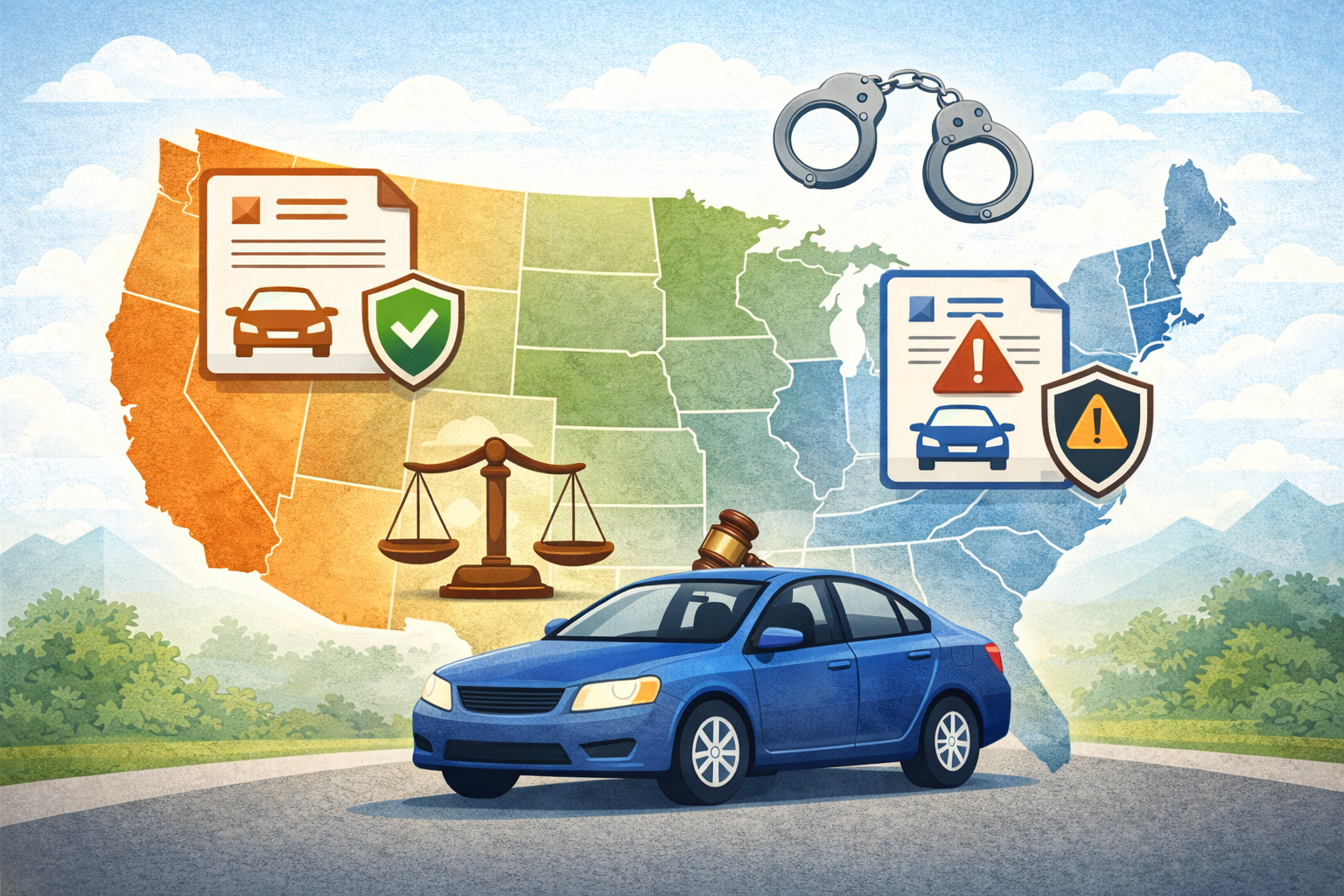
A conceptual image showing how SR-22 insurance requirements differ across states.
Introduction: Why SR-22 Insurance Requirements Vary by State
In the United States, auto insurance laws are governed primarily at the state level, not federally. As a result, compliance-based insurance filings such as SR-22 insurance are subject to different legal standards, administrative procedures, and enforcement practices depending on where a driver is licensed.
Understanding SR-22 insurance requirements by state is critical for drivers who have been notified by a court, a Department of Motor Vehicles (DMV), or another state authority that this filing is mandatory. Failing to meet the exact state-specific rules—even unintentionally—can lead to license suspension, extended compliance periods, or additional penalties.
This article explains how SR-22 insurance requirements differ across states, what elements are consistent nationwide, and how drivers can ensure full compliance regardless of jurisdiction.
The Legal Framework Behind SR-22 Insurance
State Authority Over Financial Responsibility
Unlike standard auto insurance, SR-22 insurance is rooted in state financial responsibility laws. These laws exist to ensure that drivers who pose a higher financial risk remain insured at all times.
While the federal government sets broad transportation safety guidelines, each state determines:
-
When SR-22 insurance is required
-
How long the filing must be maintained
-
Minimum liability limits
-
Enforcement and monitoring procedures
This decentralized structure explains why SR-22 insurance requirements by state can vary significantly.
Core SR-22 Insurance Requirements Shared Across Most States
Despite differences in detail, most states share several foundational SR-22 insurance requirements:
Continuous Coverage Mandate
All states that require SR-22 insurance mandate uninterrupted coverage. Any lapse—even for a single day—can trigger automatic penalties.
Insurer-to-State Filing
Drivers cannot self-file SR-22 documentation. The insurance company must submit proof of coverage directly to the state authority.
Mandatory Cancellation Notification
If an SR-22 policy is canceled, non-renewed, or lapses, the insurer must notify the state immediately. This monitoring feature is central to SR-22 enforcement.
State-Specified Minimum Liability Limits
The underlying policy must meet or exceed the state’s minimum liability requirements, which often include:
-
Bodily injury liability per person
-
Bodily injury liability per accident
-
Property damage liability
SR-22 Insurance Requirements by State: Key Areas of Variation
1. Duration of SR-22 Filing
One of the biggest differences in SR-22 insurance requirements by state is how long the filing must be maintained.
-
Some states require SR-22 insurance for 12 months
-
Others mandate 2–3 years of continuous coverage
-
Extended durations may apply for repeat violations
The compliance clock usually resets if coverage lapses.
2. Triggering Events
States differ in what violations trigger an SR-22 requirement. Common triggers include:
-
Driving without insurance
-
Repeated insurance lapses
-
Failure to provide proof of insurance
-
Certain court judgments
However, some states apply SR-22 insurance more broadly, while others reserve it for repeat or severe non-compliance.
3. Filing Authority
Depending on the state, SR-22 insurance may be filed with:
-
The Department of Motor Vehicles (DMV)
-
A Department of Transportation (DOT)
-
A court-administered compliance office
Understanding the correct filing authority is essential, as filing with the wrong agency may be considered non-compliance.
States With Stricter SR-22 Insurance Requirements
Certain states are known for more aggressive enforcement of SR-22 insurance rules. These states often have:
-
Higher minimum liability limits
-
Longer required filing periods
-
Automatic electronic monitoring systems
In these jurisdictions, even minor administrative errors—such as late payments—can result in immediate penalties.
Drivers in stricter states should expect:
-
Limited insurer options
-
Higher premiums
-
More detailed compliance reviews
Minimum Coverage Limits and SR-22 Insurance
Why Minimums Matter
Each state sets its own minimum liability limits, and SR-22 insurance must comply with those limits at all times. If a state raises its minimum requirements during the compliance period, the policy may need adjustment.
Typical Coverage Components
Most states require SR-22 policies to include:
-
Bodily injury liability
-
Property damage liability
Some states also require uninsured or underinsured motorist coverage as part of the underlying policy.
Proof of Compliance and Documentation
What States Typically Require
To remain compliant with SR-22 insurance requirements by state, drivers must ensure:
-
The insurer has successfully filed the SR-22
-
The state has acknowledged receipt
-
Coverage remains active and unchanged
Drivers are often advised to keep personal records, even though the filing itself is handled by the insurer.
Verification Methods
States may verify SR-22 compliance through:
-
Electronic insurance databases
-
Periodic audits
-
Random verification checks
Failure to appear in these systems may result in enforcement action, even if the policy exists.
Penalties for Non-Compliance With SR-22 Requirements
Failure to meet state-specific SR-22 insurance requirements can lead to serious consequences, including:
-
Immediate license suspension
-
Vehicle registration revocation
-
Extended SR-22 filing periods
-
Additional administrative fees
In some states, non-compliance may also affect future insurance eligibility.
How to Check Your State’s SR-22 Insurance Requirements
Because requirements vary, drivers should verify their obligations through official sources, such as:
-
State DMV websites
-
Court-issued compliance notices
-
Written correspondence from licensing authorities
Relying on general information without state confirmation can be risky, especially when dealing with compliance filings like SR-22 insurance.
Moving Between States While Carrying SR-22 Insurance
Interstate Complications
Drivers who relocate while carrying SR-22 insurance face unique challenges. Some states may:
-
Honor the existing SR-22 filing
-
Require a new filing under local rules
-
Adjust coverage limits
Drivers should never cancel an SR-22 policy before confirming requirements in the new state.
Best Practices for Staying Compliant Nationwide
To remain compliant with SR-22 insurance requirements by state, drivers should follow these best practices:
-
Maintain automatic payments to avoid lapses
-
Notify insurers immediately of address or vehicle changes
-
Confirm filings were accepted by the state
-
Avoid switching insurers unless necessary
-
Retain documentation for the entire compliance period
These steps significantly reduce the risk of accidental non-compliance.
Frequently Asked Questions About State SR-22 Requirements
Do all states require SR-22 insurance?
No. SR-22 insurance is only required in states that have adopted this specific filing mechanism.
Can one SR-22 policy satisfy multiple states?
Generally, no. Compliance is determined by the state issuing the requirement.
Does SR-22 insurance replace standard auto insurance?
No. SR-22 insurance supplements a standard auto insurance policy with a legal filing requirement.
Conclusion: Why State-Specific SR-22 Knowledge Is Essential
Understanding SR-22 insurance requirements by state is essential for drivers navigating compliance-based insurance obligations. While the core purpose of SR-22 insurance remains consistent—ensuring financial responsibility—the details vary widely depending on state law.
Drivers who take the time to understand their state’s requirements, maintain continuous coverage, and follow administrative procedures carefully are far more likely to complete their SR-22 obligation successfully and return to standard insurance status.