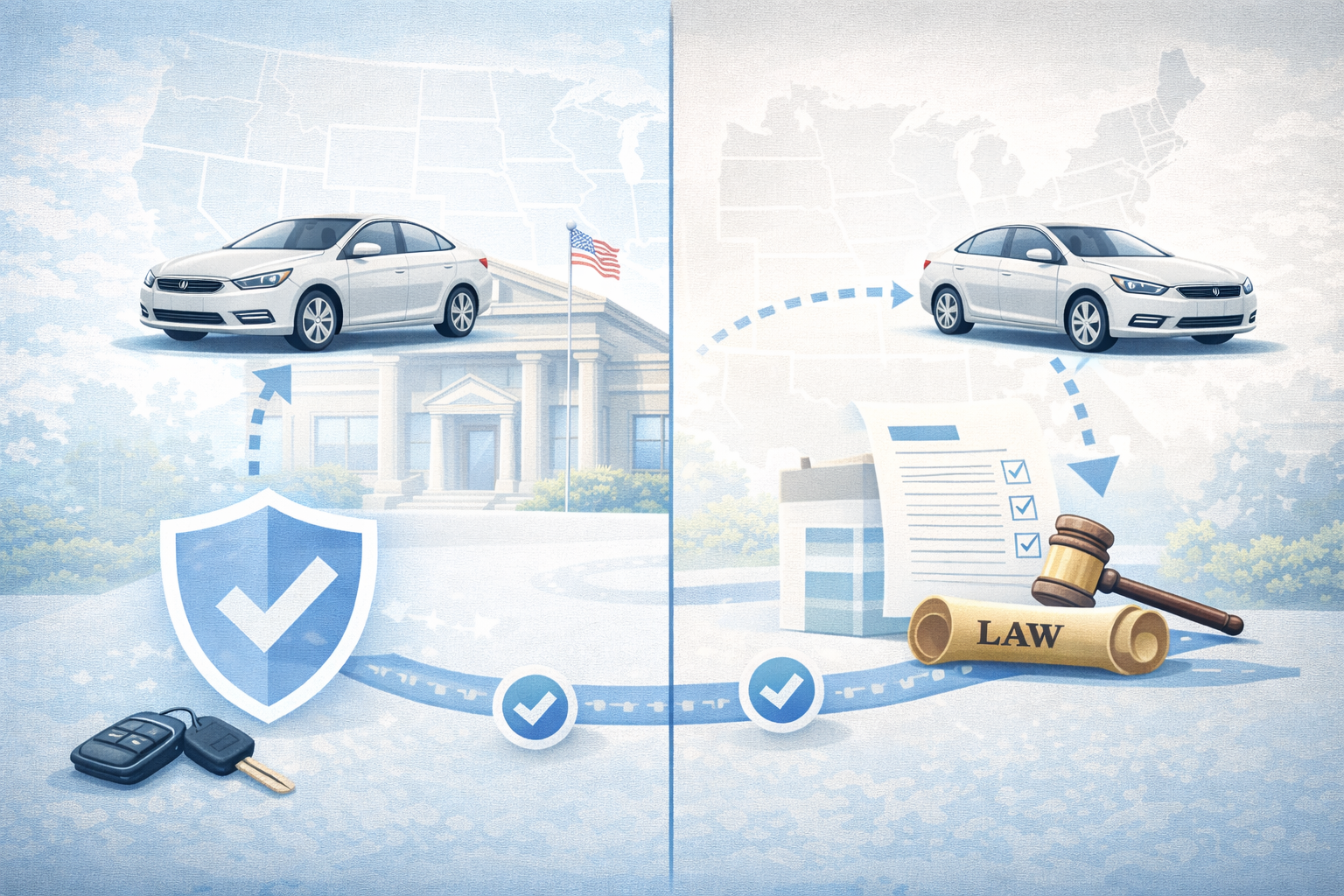
A conceptual comparison between SR-22 insurance and other financial responsibility filings.
Introduction: Why SR-22 vs SR-22 Confuses So Many Drivers
Drivers who are required to prove financial responsibility after a serious traffic violation often encounter unfamiliar terms like SR-22 insurance and SR-22. Many assume they are types of insurance policies, while others believe they are interchangeable.
In reality, SR-22 and SR-22 serve similar compliance purposes but function differently depending on state law, filing structure, and enforcement rules. Understanding the difference is critical, as choosing the wrong filing—or misunderstanding your obligation—can result in license suspension, fines, or extended compliance periods.
This article provides a clear, side-by-side explanation of SR-22 insurance vs SR-22, helping drivers make informed, legally compliant decisions.
What SR-22 Insurance Really Is
SR-22 Is a Proof of Financial Responsibility Filing
SR-22 is not an insurance policy itself. It is a state-mandated financial responsibility certificate filed by an insurance company to confirm that a driver carries the minimum required liability coverage.
Key characteristics of SR-22:
-
Filed directly with the state by the insurer
-
Confirms continuous liability coverage
-
Triggers monitoring by the DMV or state authority
-
Required after specific violations or court orders
SR-22 insurance is often associated with higher-risk drivers and stricter compliance oversight.
What SR-22 Really Is
SR-22 Is Also a Compliance Filing — But More Common Nationwide
Like SR-22, SR-22 is not an insurance policy. It is a certificate of financial responsibility used by many states to ensure that high-risk drivers maintain insurance coverage.
Key features of SR-22:
-
Filed by the insurer with the state
-
Required after serious driving offenses
-
Monitored for coverage lapses
-
Used in most U.S. states
SR-22 is more widely recognized, but that does not mean it applies everywhere.
Core Similarities Between SR-22 and SR-22
Despite the confusion, SR-22 and SR-22 share several important similarities:
-
Both are state compliance filings, not policies
-
Both require continuous liability insurance
-
Both apply to high-risk drivers
-
Both trigger DMV monitoring
-
Both impose penalties for lapses or cancellations
These similarities often lead drivers to assume they are interchangeable—but they are not.
The Key Difference: State-Specific Legal Framework
SR-22 Is State-Specific
SR-22 is used in specific jurisdictions where state law mandates a different form of financial responsibility certification than SR-22.
In these states:
-
SR-22 may not be accepted
-
SR-22 is the legally required document
-
Filing procedures differ
-
Compliance rules may be stricter
Drivers cannot substitute SR-22 for SR-22 if state law specifies SR-22.
SR-22 Is More Widely Adopted
SR-22 is used in most states and is often referenced generically in discussions of high-risk insurance compliance.
However, “SR-22” is not a universal term, and some states use alternative forms like SR-22 instead.
Filing Process: SR-22 vs SR-22
SR-22 Filing Process
-
Insurer files SR-22 directly with the state
-
Filing confirms active liability coverage
-
State begins real-time monitoring
-
Any lapse triggers immediate notification
SR-22 filings often involve stricter administrative oversight.
SR-22 Filing Process
-
Insurer submits SR-22 electronically or by mail
-
State tracks coverage status
-
Cancellation or lapse triggers penalties
While similar in concept, the filing systems are not interchangeable.
Cost Differences: SR-22 vs SR-22
Insurance Premium Impact
Neither SR-22 nor SR-22 directly sets insurance prices. However:
-
Drivers requiring either filing are classified as high risk
-
Premiums are higher than standard insurance
-
Costs vary by state, violation type, and driving history
In many cases, SR-22 insurance can be slightly more expensive due to limited insurer participation.
Filing and Administrative Fees
-
SR-22 filings may involve higher administrative costs
-
SR-22 filings are often more standardized and widely supported
-
Fee structures vary by insurer
Drivers should always confirm whether filing fees are included in the quote.
Duration Requirements: How Long You Must Carry Each
SR-22 Duration
-
Determined by state law or court order
-
Often ranges from 1 to 3 years
-
Continuous coverage is mandatory
SR-22 Duration
-
Typically 2 to 3 years
-
Some states require longer periods for repeat offenses
Ending coverage early—regardless of filing type—can reset the compliance clock.
Penalties for Lapses: Which Is Stricter?
Both SR-22 and SR-22 impose penalties for coverage lapses, but SR-22 enforcement may be more aggressive in some states.
Potential penalties include:
-
Immediate license suspension
-
Vehicle registration suspension
-
Extended compliance periods
-
Reinstatement fees
This makes proper management especially critical for SR-22 drivers.
Non-Owner Policies: SR-22 vs SR-22
Availability Differences
Non-owner policies are often available for both filings, but:
-
Some states restrict non-owner SR-22 filings
-
SR-22 non-owner policies are more widely offered
Drivers without vehicles should confirm eligibility before purchasing.
Can You Switch Between SR-22 and SR-22?
Generally, No
Drivers cannot choose between SR-22 and SR-22 arbitrarily. The required filing is dictated by:
-
State law
-
Court order
-
DMV requirements
Attempting to file the wrong certificate can result in non-compliance.
Common Myths About SR-22 and SR-22
Myth 1: They Are Insurance Policies
Both are filings, not policies.
Myth 2: SR-22 Works Everywhere
Some states require SR-22 instead.
Myth 3: Cheap Coverage Is Always Safe
Low-cost policies may lack proper filing support.
Which Filing Is “Worse” for Drivers?
Neither SR-22 nor SR-22 is inherently worse. The impact depends on:
-
State enforcement
-
Insurer experience
-
Compliance duration
-
Driving behavior during the period
Drivers who maintain continuous coverage and avoid violations often complete either requirement smoothly.
How to Know Which One You Need
Drivers should verify requirements through:
-
DMV notices
-
Court documentation
-
Official state correspondence
Insurance agents cannot override state mandates.
Choosing the Right Insurer for SR-22 or SR-22
Regardless of filing type, drivers should choose insurers that:
-
Are licensed in the state
-
Have direct filing authority
-
Offer electronic compliance monitoring
-
Provide clear lapse notifications
Experience matters more than brand recognition.
SEO Comparison Summary: SR-22 vs SR-22
| Feature | SR-22 | SR-22 |
|---|---|---|
| Filing Type | Financial Responsibility Certificate | Financial Responsibility Certificate |
| Geographic Use | State-specific | Nationwide |
| Insurer Availability | Limited | Broad |
| Compliance Strictness | Often higher | Moderate |
| Substitution Allowed | No | No |
Conclusion: Understanding the Difference Protects Your License
The difference between SR-22 insurance and SR-22 is more than terminology—it is a legal distinction with serious consequences. Filing the correct certificate, maintaining uninterrupted coverage, and choosing an experienced insurer are essential to protecting your driving privileges.
Drivers who clearly understand their state’s requirements avoid costly mistakes, extended penalties, and unnecessary stress during their compliance period.