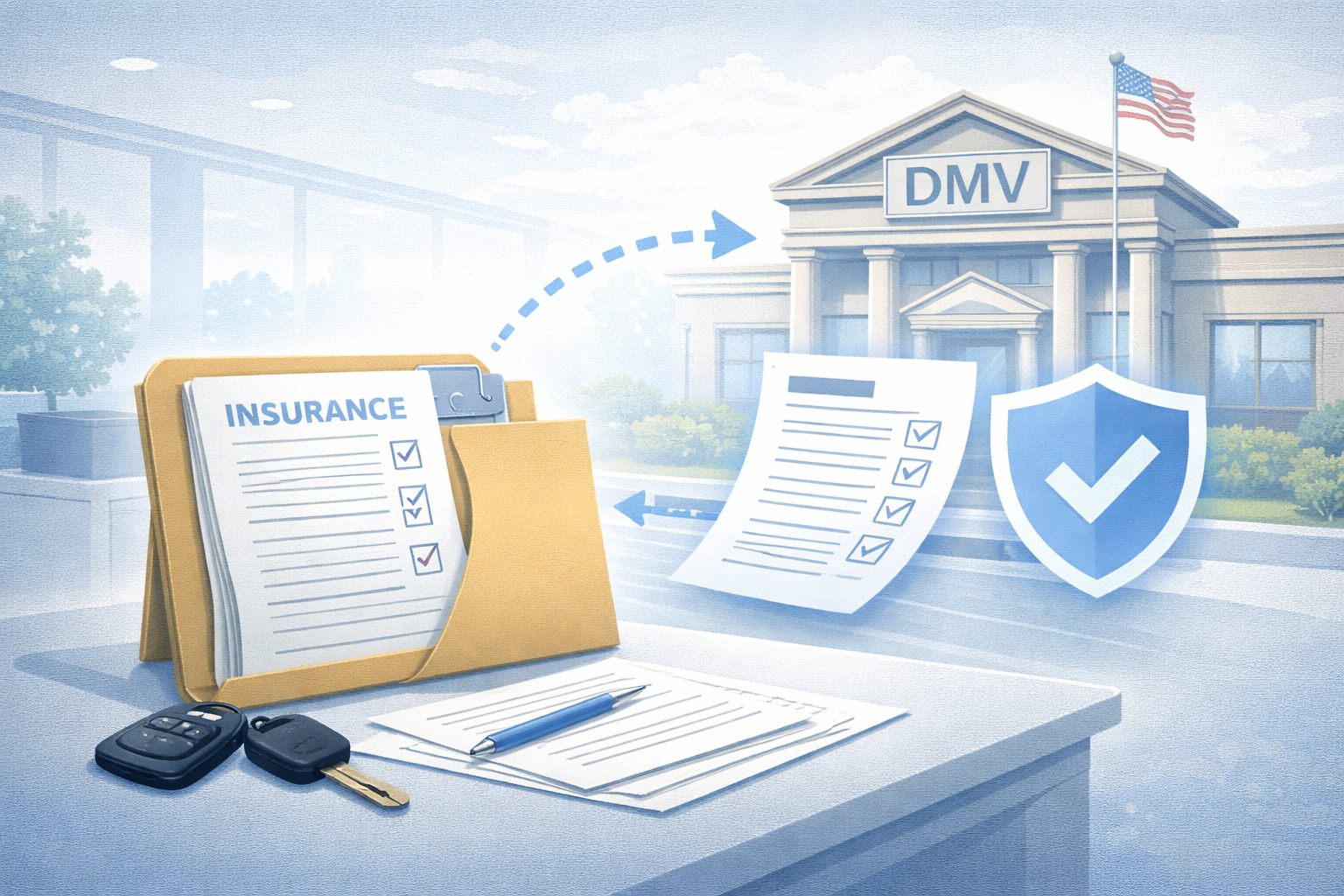
A visual guide to the SR-22 insurance filing process with the DMV.
Introduction: Why DMV Filing Matters for SR-22 Insurance
When a driver is required to carry SR-22 insurance, purchasing an auto insurance policy alone is not enough. The most critical step in the compliance process is filing SR-22 insurance with the DMV or the designated state authority. Without this filing, the state has no legal confirmation that a driver meets its financial responsibility requirements.
Understanding how to file SR-22 insurance with the DMV helps drivers avoid license reinstatement delays, administrative penalties, and costly compliance errors. This guide explains the filing process in detail, from documentation to confirmation, and highlights common mistakes to avoid.
What Does “Filing SR-22 Insurance” Mean?
Filing vs. Buying Insurance
A common misconception is that drivers can submit proof of insurance themselves. In reality, SR-22 insurance filing is a formal certification submitted by the insurance company, not the driver.
When SR-22 insurance is filed:
-
The insurer confirms active coverage
-
The filing is transmitted directly to the DMV or state agency
-
The state records the driver as compliant
-
Coverage is monitored for the required period
This process creates a legal link between the insurer and the state.
Who Is Responsible for Filing SR-22 Insurance?
The Insurer’s Role
Only licensed insurance providers authorized by the state can file SR-22 insurance. Once coverage is active, the insurer:
-
Prepares the SR-22 filing
-
Submits it electronically or by approved method
-
Notifies the state of any changes or cancellations
The Driver’s Responsibility
While drivers cannot file SR-22 themselves, they are responsible for:
-
Requesting the filing
-
Verifying state acceptance
-
Maintaining uninterrupted coverage
Step-by-Step: How to File SR-22 Insurance With the DMV
Step 1: Confirm the SR-22 Filing Requirement
Before taking action, drivers should confirm:
-
That SR-22 insurance is required
-
Which DMV or state agency receives the filing
-
The required duration of compliance
This information is typically provided in a notice from the DMV or a court.
Step 2: Purchase a Qualifying Auto Insurance Policy
The policy must:
-
Meet or exceed state minimum liability limits
-
Be issued by an insurer authorized to file SR-22
-
Remain active throughout the compliance period
Not all insurers handle SR-22 filings, so choosing the right provider is essential.
Step 3: Request the SR-22 Filing From Your Insurer
Once the policy is active, the driver must explicitly request the SR-22 insurance filing. The insurer will then:
-
Prepare the filing documentation
-
Submit it directly to the DMV
-
Record the filing date
Without this request, no filing occurs—even if the policy exists.
Step 4: DMV Processing and Verification
After submission, the DMV:
-
Reviews the SR-22 filing
-
Confirms policy compliance
-
Updates the driver’s status
Processing times vary by state and can range from same-day confirmation to several weeks.
Step 5: Confirm DMV Acceptance
Drivers should never assume the filing was accepted. Best practices include:
-
Checking DMV online portals
-
Requesting written confirmation
-
Following up with the insurer
Failure to confirm acceptance is a leading cause of delayed reinstatement.
Electronic vs. Paper SR-22 Filings
Electronic Filing Systems
Many states now use electronic insurance verification systems. These offer:
-
Faster processing
-
Reduced error rates
-
Real-time compliance monitoring
Paper Filing (Where Applicable)
In states that still accept paper filings, processing may take longer, and errors are more common.
Regardless of method, the legal effect is the same once the filing is accepted.
How Long DMV Processing Takes
The time required to file SR-22 insurance with the DMV depends on:
-
State systems and workload
-
Filing method
-
Accuracy of submitted information
Typical timelines include:
-
Same-day electronic confirmation
-
Several business days for standard processing
-
Extended review for incomplete filings
What Happens After the SR-22 Filing Is Accepted?
Once accepted:
-
The driver is marked as compliant
-
The compliance period officially begins
-
Continuous coverage monitoring starts
For drivers seeking license reinstatement, acceptance of the SR-22 filing is often a prerequisite to regaining driving privileges.
What Happens If an SR-22 Filing Is Rejected?
Rejections occur when:
-
Coverage limits do not meet state requirements
-
Policy information is incorrect
-
The insurer is not authorized to file SR-22
If rejected, drivers must correct the issue immediately. Driving privileges may remain suspended until compliance is achieved.
Common Mistakes When Filing SR-22 Insurance
Drivers often encounter problems due to:
-
Assuming insurance purchase equals filing
-
Using insurers unfamiliar with SR-22 requirements
-
Allowing policies to lapse during processing
-
Failing to verify DMV acceptance
Avoiding these mistakes is critical to successful compliance.
Can You Change Insurance Companies After Filing SR-22?
Yes, but the process must be handled carefully:
-
The new insurer must file a replacement SR-22
-
The original policy must remain active until the new filing is accepted
-
Gaps in coverage are not permitted
Improper transitions can reset the compliance period.
DMV Fees and Additional Requirements
In addition to filing SR-22 insurance, states may require:
-
Reinstatement fees
-
Administrative processing fees
-
Proof of identity or residency
These requirements are separate from insurance obligations but equally important.
Best Practices for a Smooth SR-22 DMV Filing
To ensure successful filing:
-
Choose insurers experienced with SR-22
-
Request filing immediately after policy activation
-
Confirm DMV acceptance in writing
-
Set up automatic payments
-
Keep personal records of all communications
These steps reduce the risk of delays and penalties.
Frequently Asked Questions About Filing SR-22 Insurance
Can I file SR-22 insurance myself?
No. Only insurers can submit the filing.
Does filing SR-22 guarantee license reinstatement?
No. It satisfies one requirement but does not replace others.
Will the DMV notify me if the filing is accepted?
Some states do, but drivers should always verify independently.
Conclusion: Why Proper SR-22 Filing With the DMV Is Essential
Understanding how to file SR-22 insurance with the DMV is essential for maintaining legal driving status and avoiding repeated suspensions. The filing process ensures transparency, accountability, and continuous coverage monitoring—key elements of state financial responsibility enforcement.
Drivers who follow the proper steps, work with experienced insurers, and confirm acceptance can complete their SR-22 obligation efficiently and move forward toward restored driving privileges.