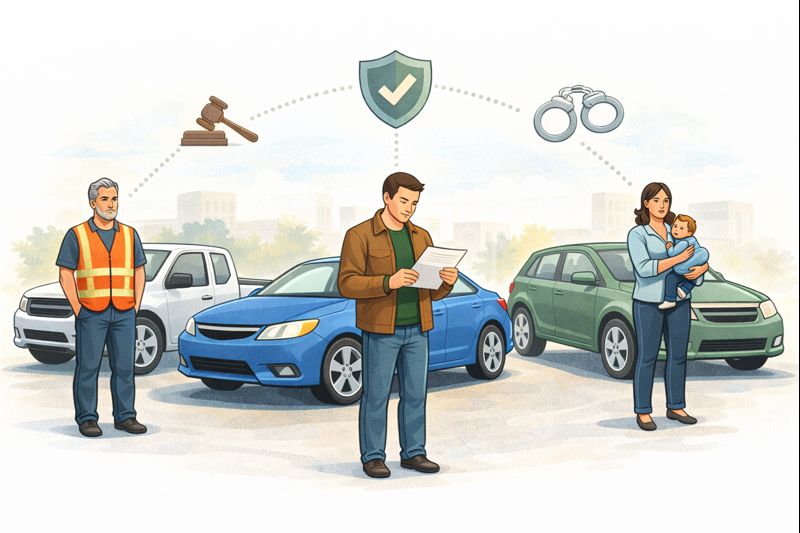

An educational visual representing who needs SR-22 insurance and why it is required.
Introduction: Understanding SR-22 Insurance in the U.S. Insurance System
In the United States, auto insurance is not only a financial product but also a legal requirement closely tied to state motor vehicle laws. Among the many compliance-related insurance filings, SR-22 insurance is one that often causes confusion for drivers who encounter it for the first time. Unlike standard auto insurance, SR-22 is typically required under specific legal or administrative circumstances, often involving higher-risk drivers or court-ordered financial responsibility.
This article provides a comprehensive explanation of what SR-22 insurance is and who needs it, helping drivers, insurers, and compliance-focused users clearly understand its purpose, scope, and legal implications. Whether you were notified by a state agency, a court, or an insurer, understanding SR-22 insurance is essential to remaining compliant and avoiding further penalties.
What Is SR-22 Insurance?
SR-22 insurance is a form of state-mandated insurance filing that serves as proof of financial responsibility. It is not a standalone insurance policy but rather a legal certification linked to an auto insurance policy, filed with a state authority—usually the Department of Motor Vehicles (DMV) or a similar agency.
The primary purpose of SR-22 insurance is to demonstrate that a driver meets specific state-required liability coverage levels after being classified as higher risk or non-compliant in the past. In many cases, SR-22 insurance is imposed after serious violations, repeated offenses, or administrative actions affecting driving privileges.
Key characteristics of SR-22 insurance include:
-
It confirms continuous insurance coverage
-
It is monitored by the state
-
It carries stricter compliance rules than standard auto insurance
-
It often applies for a fixed legal duration
From a regulatory standpoint, SR-22 insurance functions as a compliance mechanism, ensuring that certain drivers maintain uninterrupted insurance coverage for a defined period.
How SR-22 Insurance Works
To understand what SR-22 insurance is, it is important to distinguish between insurance coverage and insurance filing.
When a driver is required to carry SR-22 insurance, the process typically involves:
-
Purchasing an auto insurance policy that meets state minimum liability requirements
-
Requesting the insurer to issue an SR-22 filing
-
The insurer submitting proof of coverage directly to the state
-
The state monitoring coverage status for the required period
If the policy lapses, is canceled, or fails to renew, the insurer is legally obligated to notify the state. This automatic reporting mechanism is what makes SR-22 insurance stricter than standard insurance coverage.
Who Needs SR-22 Insurance?
The question of who needs SR-22 insurance depends on state law, court orders, and individual driving history. While requirements vary by jurisdiction, SR-22 insurance is generally required for drivers who fall into one or more of the following categories.
High-Risk Drivers
Drivers classified as high risk by state authorities are among the most common recipients of SR-22 insurance requirements. This classification may result from:
-
Multiple traffic violations within a short period
-
Serious moving violations
-
Failure to maintain required insurance coverage
SR-22 insurance serves as a safeguard to ensure these drivers remain insured at all times.
Drivers With Insurance Violations
If a driver is caught operating a vehicle without insurance or allowing coverage to lapse, the state may require SR-22 insurance as a condition for continued driving privileges. In such cases, SR-22 insurance demonstrates restored compliance and financial responsibility.
Court-Ordered Insurance Filings
In some situations, a court may order SR-22 insurance as part of a legal judgment. This often occurs following offenses that involve financial liability risks, such as accidents where insurance coverage was inadequate or absent.
Drivers Seeking License Reinstatement
For drivers whose licenses have been suspended or revoked, SR-22 insurance may be required before reinstatement. The filing acts as proof that the driver has taken corrective action and meets ongoing insurance obligations.
Common Situations That Trigger an SR-22 Requirement
While not exhaustive, the following scenarios commonly result in an SR-22 insurance requirement:
-
Repeated failure to carry mandatory auto insurance
-
Administrative suspension related to insurance non-compliance
-
Accumulation of high-risk driving points
-
Court rulings involving financial responsibility
-
Certain non-criminal but serious traffic violations
It is important to note that SR-22 insurance is preventive rather than punitive. Its primary goal is to protect the public by ensuring high-risk drivers remain insured.
SR-22 Insurance vs Standard Auto Insurance
A common misunderstanding is that SR-22 insurance is a special type of coverage. In reality, the coverage itself is usually standard auto liability insurance, but the filing requirement makes it different.
| Feature | Standard Auto Insurance | SR-22 Insurance |
|---|---|---|
| Filing with state | Not required | Mandatory |
| Continuous monitoring | No | Yes |
| Cancellation notice | Optional | Required |
| Legal oversight | Minimal | High |
Because of these differences, drivers required to carry SR-22 insurance often face higher premiums and fewer policy options.
Legal Consequences of Not Carrying SR-22 Insurance
Failing to maintain SR-22 insurance once required can lead to serious consequences, including:
-
Immediate license suspension
-
Extended compliance periods
-
Additional fines and fees
-
Difficulty obtaining future insurance
States treat violations involving SR-22 insurance seriously because the requirement is imposed only after prior non-compliance or elevated risk has already been established.
How Long SR-22 Insurance Is Typically Required
Although duration requirements vary by state, SR-22 insurance is commonly required for one to three years of continuous coverage. During this time:
-
Coverage must remain active without lapses
-
Policy changes must be reported
-
Cancellation is not allowed without state approval
Completing the required period without violations is essential for returning to standard insurance status.
Frequently Asked Questions About SR-22 Insurance
Is SR-22 insurance the same as high-risk insurance?
Not exactly. SR-22 insurance is a filing requirement, while high-risk insurance refers to the underwriting category of the driver.
Can I switch insurance companies while carrying SR-22?
Yes, but the new insurer must file a replacement SR-22 before the old policy is canceled.
Does SR-22 insurance cover damages?
Yes. The underlying policy provides standard liability coverage according to state minimums or higher limits selected by the driver.
Why Understanding SR-22 Insurance Matters
Understanding what SR-22 insurance is and who needs it helps drivers avoid costly mistakes, delayed reinstatements, and legal trouble. Because SR-22 insurance operates at the intersection of insurance law and motor vehicle regulation, even small errors—such as a missed payment—can have outsized consequences.
From an SEO and consumer education standpoint, SR-22 insurance represents a critical topic for drivers actively searching for compliance-related guidance. Clear, accurate information empowers drivers to meet legal obligations efficiently and regain normal driving status as soon as possible.
Conclusion: Is SR-22 Insurance Required for You?
SR-22 insurance is not required for most drivers, but for those who need it, compliance is non-negotiable. It serves as a legal assurance to the state that a driver will maintain continuous insurance coverage after prior violations or elevated risk.
If you have been notified that SR-22 insurance is required, the most important steps are to act quickly, maintain uninterrupted coverage, and fully understand your state’s specific rules. Doing so not only protects your legal standing but also helps you move closer to returning to standard insurance conditions.