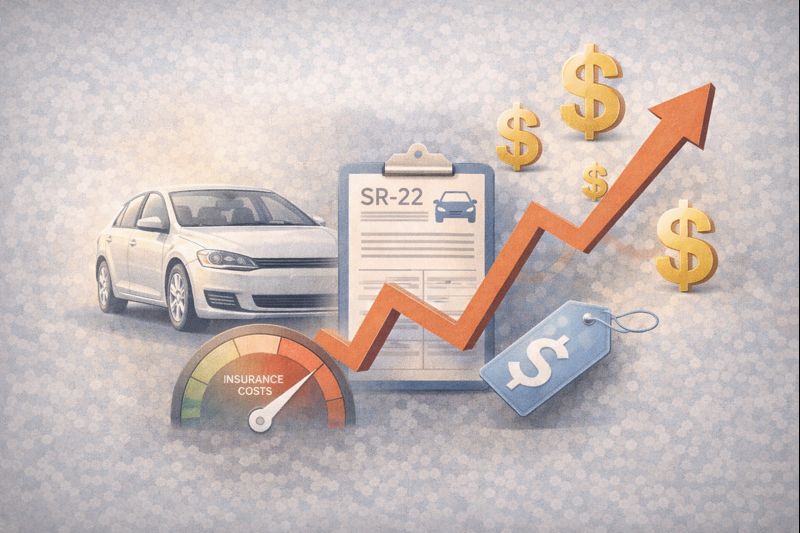

Visual representation of increased insurance costs associated with SR-22 insurance for high-risk drivers.
SR-22 insurance plays a critical role in the U.S. auto insurance system, especially for drivers classified as high risk. While commonly referred to as “SR-22 insurance,” an SR-22 is not an insurance policy itself. Instead, it is a state-mandated certificate of financial responsibility that proves a driver carries the minimum required auto liability coverage.
This guide provides a comprehensive explanation of SR-22 insurance, including how it works, how much it costs, who needs it, and how requirements differ by state. Whether you are dealing with a suspended license, a DUI conviction, or repeated traffic violations, understanding SR-22 insurance is essential to regaining and maintaining legal driving privileges in the United States.
What Is SR-22 Insurance?
SR-22 insurance refers to an SR-22 filing submitted by an insurance company to a state’s Department of Motor Vehicles (DMV) or equivalent authority. The filing verifies that a driver maintains at least the state-required minimum liability coverage.
Drivers are typically required to carry SR-22 insurance after being deemed high risk due to serious or repeated violations, such as:
-
DUI or DWI convictions
-
Driving without insurance
-
License suspension or revocation
-
Reckless or excessive speeding violations
-
Accumulation of multiple at-fault accidents
Once filed, the SR-22 places the driver under closer state monitoring. Any lapse or cancellation in coverage is immediately reported to the DMV, often resulting in renewed suspension or additional penalties.
Who Needs SR-22 Insurance in the United States?
SR-22 insurance is required only in specific circumstances and varies by state. Most drivers who need SR-22 insurance fall into one of the following categories:
-
Drivers with a suspended or revoked license
-
Individuals convicted of DUI or DWI
-
Drivers caught operating a vehicle without insurance
-
High-risk drivers ordered by a court or DMV to prove financial responsibility
Understanding how to qualify for SR-22 insurance in the US depends on meeting both insurance company underwriting requirements and state legal mandates. In most cases, drivers must purchase a policy from an insurer willing to file the SR-22 on their behalf.
SR-22 Insurance Requirements by State
One of the most confusing aspects of SR-22 insurance is that requirements vary significantly by state. Not all states use SR-22 filings, and those that do may apply different rules regarding duration, coverage limits, and violations that trigger the requirement.
For example:
-
Some states require SR-22 insurance for three years, while others mandate longer periods
-
Filing fees, reinstatement costs, and monitoring standards differ by jurisdiction
-
Certain states allow alternatives such as FR-44 filings with higher coverage limits
Because of these differences, understanding SR-22 insurance requirements by state is essential before purchasing coverage. Drivers should always verify requirements with their state DMV or a licensed insurance professional.
SR-22 Insurance Minimum Coverage Requirements
SR-22 insurance does not create new coverage types, but it enforces compliance with state minimum liability requirements. These minimums typically include:
-
Bodily injury liability per person
-
Bodily injury liability per accident
-
Property damage liability
Each state sets its own minimums, and failure to maintain them can result in severe consequences. Meeting SR-22 insurance minimum coverage requirements is mandatory throughout the filing period. Increasing coverage beyond the minimum may reduce long-term financial risk, especially for drivers with prior violations.
SR-22 Insurance Cost for High-Risk Drivers
One of the most common concerns is SR-22 insurance cost for high-risk drivers. While the SR-22 filing itself is relatively inexpensive, the overall insurance premium often increases substantially.
Key cost factors include:
-
Driving history and severity of violations
-
State filing requirements
-
Length of SR-22 obligation
-
Insurance carrier risk assessment
High-risk drivers may experience premium increases ranging from 30% to over 100% compared to standard policies. Shopping carefully and maintaining a clean driving record during the filing period can help reduce long-term costs.
Cheap SR-22 Insurance for Suspended License Drivers
Drivers with suspended licenses often assume SR-22 insurance is unavailable or unaffordable. In reality, cheap SR-22 insurance for suspended license drivers is possible under certain conditions.
Many insurers offer policies specifically designed to help drivers meet legal requirements without excessive coverage costs. Options may include:
-
Liability-only policies
-
Non-owner SR-22 insurance
-
Flexible payment structures
Comparing multiple providers and avoiding coverage lapses are critical strategies for managing affordability while complying with state mandates.
SR-22 Insurance After DUI or DWI Conviction
A DUI or DWI conviction is one of the most common reasons for requiring SR-22 insurance. SR-22 insurance after DUI or DWI conviction typically involves higher premiums, longer filing periods, and stricter state oversight.
In addition to insurance requirements, drivers may face:
-
License suspension or revocation
-
Mandatory alcohol education programs
-
Court-imposed fines and monitoring
Maintaining uninterrupted SR-22 coverage is especially important after a DUI or DWI, as any lapse can restart the required filing period or lead to harsher penalties.
Non-Owner SR-22 Insurance for High-Risk Drivers
Not all drivers required to file SR-22 insurance own a vehicle. Non-owner SR-22 insurance for high-risk drivers is designed for individuals who drive borrowed, rented, or employer-provided vehicles.
This type of policy:
-
Meets state financial responsibility requirements
-
Covers liability only (no vehicle damage coverage)
-
Is often more affordable than standard auto policies
Non-owner SR-22 insurance is a common solution for drivers seeking license reinstatement without owning a car.
SR-22 Insurance State Laws and Filing Requirements
Understanding SR-22 insurance state laws and filing requirements is essential for compliance. In most cases, the insurance company files the SR-22 directly with the DMV. Drivers should never attempt to file the form themselves unless explicitly instructed by the state.
Key compliance rules include:
-
Continuous coverage for the entire filing period
-
Immediate reporting of cancellations or lapses
-
Payment of reinstatement and filing fees
Failure to comply with state laws can result in license suspension, fines, or extended SR-22 obligations.
How Long Do You Need SR-22 Insurance?
The duration of SR-22 insurance requirements depends on the state and the underlying violation. Most states require drivers to carry SR-22 insurance for three years, though periods may range from one to five years or longer.
Maintaining uninterrupted coverage is critical. Even a brief lapse can reset the compliance period, significantly increasing both cost and legal consequences.
Final Thoughts: Navigating SR-22 Insurance with Confidence
SR-22 insurance can feel overwhelming, but it is ultimately a structured path toward legal driving reinstatement. By understanding costs, coverage requirements, and state laws, drivers can make informed decisions that protect both their finances and driving privileges.
Whether you need SR-22 insurance due to a DUI, license suspension, or other high-risk classification, compliance and consistency are key. Choosing the right provider, maintaining continuous coverage, and following state-specific rules can help you move forward with confidence and regain full driving freedom.